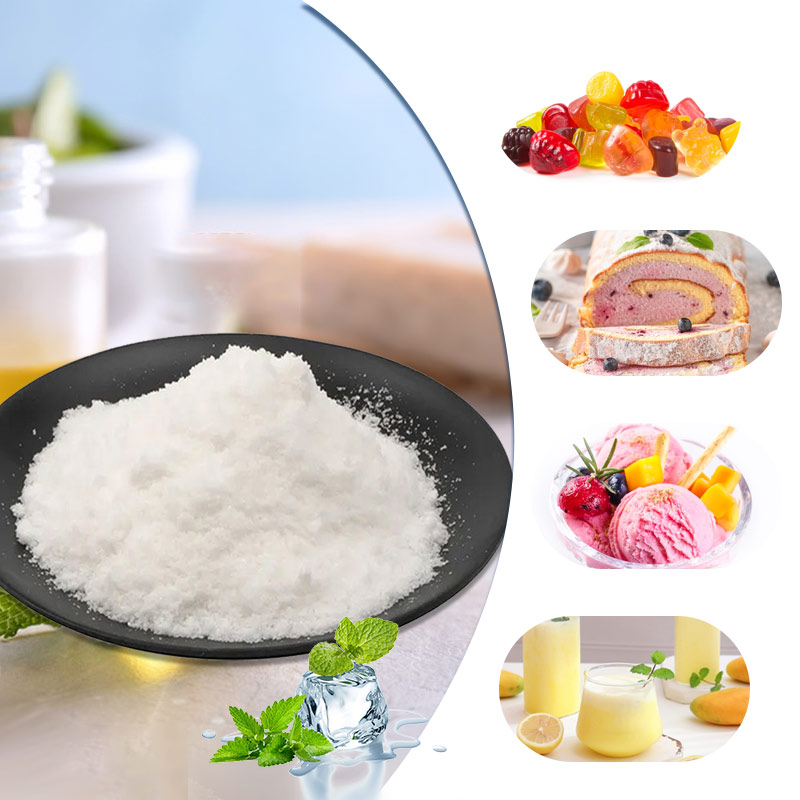
With the rapid development of chemical technology and the continuous improvement of our quality of life, flavor essences have quietly permeated every aspect of our daily lives. Whether it's the beverages we drink, the shampoos we use for hair care, or the snacks we enjoy for a treat, words like "edible flavor/essence," "daily-use flavor essence" can be frequently seen on the ingredient lists. The general public commonly believes that flavor essences are artificially synthesized compounds, which are "non-natural products," and thus there are concerns about potential harm to human health. So, what exactly is a flavor essence? Does it really pose a threat to our health? Let's uncover the mysteries of flavor essences together.
A flavor essence is essentially a mixture of various fragrances. A fragrance, as a substance that can be perceived by the sense of smell or tasted for its aroma, can be classified into natural fragrances and artificial fragrances according to its source:
Natural Fragrances
Plant-based Fragrances: Derived from parts of plants such as flowers, leaves, stems, and fruits. Examples include rose essential oil, jasmine concrete, and lavender essential oil, which are often used in perfumes, skin care products, and to enhance the aroma of food.
Animal-based Fragrances: Sourced from animal glands or secretions, such as musk, civet musk, and ambergris. However, due to the significant harm to animals during the extraction process and the protection status of some animals, their usage is currently limited.
Artificial Fragrances
Isolated Fragrances: Monomer fragrance compounds obtained by separating and purifying from natural fragrances through physical or chemical means. For example, menthol (menthol crystal) extracted from peppermint oil. Although it is separated artificially, the ingredient itself is natural and has a high level of safety.
Synthetic Fragrances: Prepared through organic synthesis using products from coal chemical industry, petrochemical industry, or isolated fragrances as raw materials. The relationship between synthetic fragrances and natural fragrances can be divided into two situations: one is the "natural equivalent" synthesized by imitating the key component structure of natural fragrances, such as the fragrance synthesized by imitating the aroma components of Damascus rose essential oil; the other is when the cost of synthesizing the same structure as the natural fragrance is too high, and a compound with a different structure but a similar aroma is synthesized. The common "musk" raw material in perfumes mostly belongs to this category.
Although natural fragrances have their unique charm, they have many limitations. Their production and quality are significantly affected by natural conditions (climate, origin, harvest), and processing techniques, making it difficult to achieve stable supply. Moreover, the production cost is high, which is not conducive to large-scale production and application. In contrast, synthetic fragrances can achieve stable supply and reduce costs through artificial control of the production process, so they are widely used in the industrial field.
Controversy over the Classification of Flavor Essences: Usually, flavor essences are not simply divided into natural or artificial types because it is extremely rare to use only natural raw materials when formulating flavor essences. However, from the perspective of fragrance mixing, if rose essential oil (containing multiple compounds) is regarded as a "natural flavor essence," it is also somewhat reasonable, but this statement is not commonly used.
Perfumes and the Concentration of Flavor Essences: Perfumes are a mixture of flavor essences and alcohol. According to the difference in the concentration of flavor essences, they can be divided into Eau de Cologne (pure flavor essence accounts for 2 - 5%), Eau de Toilette (4–10%), Eau de Parfum (8–15%), and Parfum/Extrait (15–25%). The higher the concentration, the more intense and long-lasting the aroma.
Usage Regulations for Fragrances and Flavor Essences
Edible Fragrances: In 1955, WHO and FAO began to conduct research on edible fragrances (as food additives) and formulated standards for food additives. China legislated in 1980. The National Technical Committee on Food Additives Standardization evaluates the safety, which is approved by the Ministry of Health and issued by the National Administration of Quality Supervision, Inspection and Quarantine.
Daily-use Fragrances: Currently, it mainly relies on civil organizations to achieve "self-discipline within the industry." The IFRA (International Fragrance Association) and RIFM (Research Institute for Fragrance Materials in the United States) have a greater influence. China refers to their evaluation results.
The Dynamic Nature of the Safety of Fragrances: Not all fragrances that are evaluated as safe by legislation and civil organizations are absolutely safe. With the development of science and technology and the accumulation of practical experience, the safety evaluation of fragrances is constantly updated. For example, musk ketone was once considered GRAS (Generally Recognized As Safe), but later it was found to have neurotoxicity and was banned.
Flavor essences used in strict accordance with regulations are basically harmless, but absolute safety cannot be guaranteed. Natural fragrances have complex compositions (such as lavender essential oil containing hundreds of components), making it difficult to conduct a comprehensive inspection. In contrast, synthetic fragrances have clear components. From the perspective of component knowability and safety assessment, some synthetic fragrances may even have more advantages than natural fragrances. If you have doubts about the safety of flavor essences, you can choose products that are free of added flavor essences.
Check the Ingredient List: This is the most direct method. If the ingredient list of a product labels "edible flavor essence," "fragrance," "flavor essence and fragrance," etc., it indicates that flavor essences have been added. However, there is still a possibility that unscrupulous merchants may hide the labeling.
Sensory Judgment: Natural products have a natural and mild aroma. Products with added flavor essences may have an overly strong, pungent, or unnatural smell. However, for products that have been specially processed or have a light aroma, this method may not be very accurate. In addition, food products with added flavor essences may have characteristics such as overly bright colors and unnatural tastes, but these also cannot be used as absolute judgment criteria.
Effect Verification: For products such as essential oils and pure fruit juices, you can assist in judging by observing whether they have the expected effects that natural raw materials should have after use. However, this requires a certain amount of time and experience accumulation.
As an essential part of modern life, flavor essences, when used in a standardized manner, can add charm and improve the quality of products. Consumers only need to view them rationally, pay attention to product information, and make reasonable choices. In this way, they can enjoy the convenience and pleasure brought by flavor essences while ensuring their own health.
Post time:2025-05-06